For years, handheld gaming PCs have been an awkward exercise in compromise: shove a laptop chip into a smaller chassis, throttle the TDP to somewhere manageable, and hope the thermals don’t kill your frame time. Intel’s new Arc G-Series is a direct attempt to stop pretending that approach is good enough.
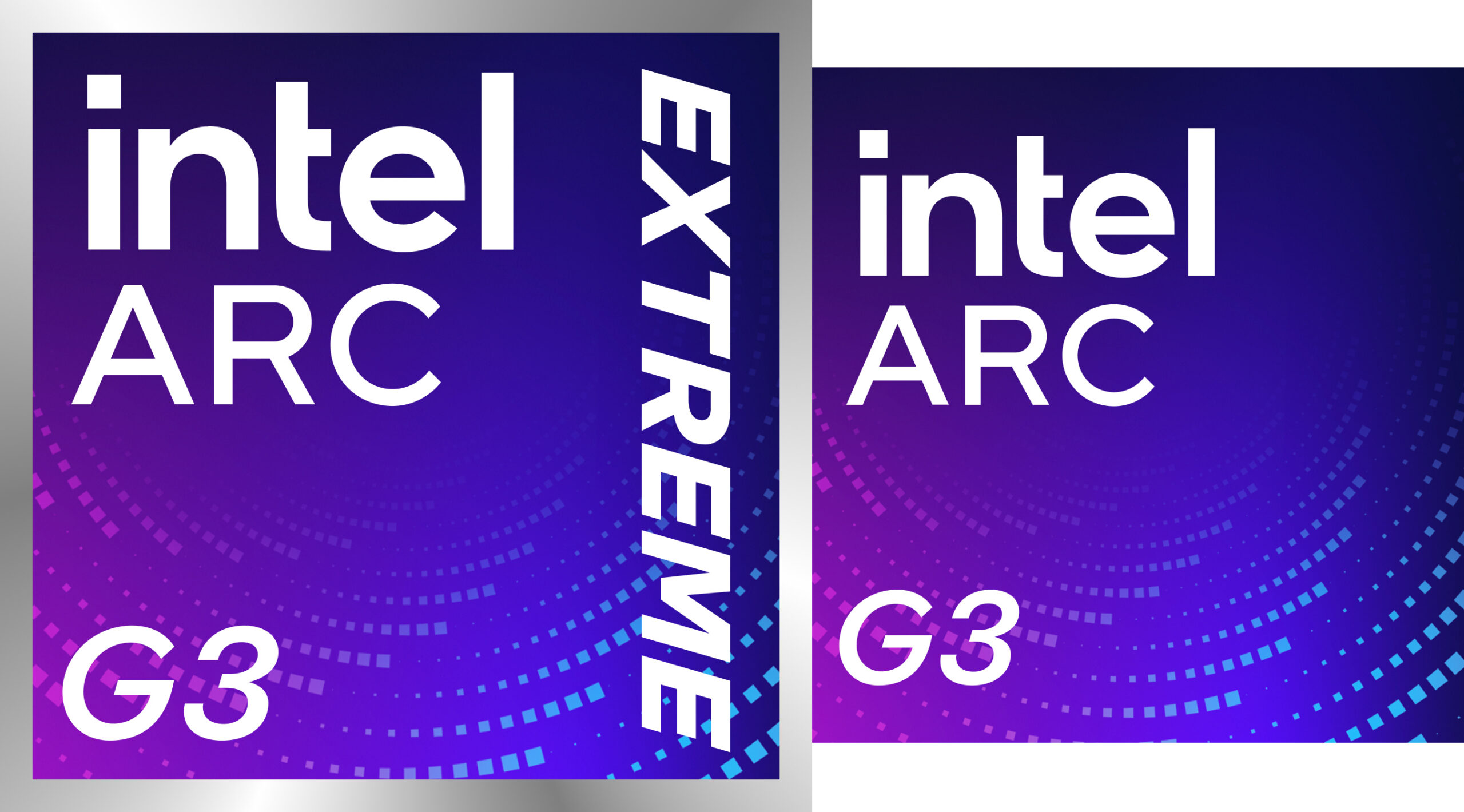
Announced Wednesday, the G-Series launches with two chips: the Arc G3 and the Arc G3 Extreme, both running Windows 11 and targeting handheld form factors specifically. The architecture traces back to Intel’s Core Ultra Series 3 (Panther Lake), but Intel says the core counts, power management stack, and software layer have all been reworked with one use case in mind. We’ll reserve final judgment for bench time, but the configuration choices on paper are genuinely interesting.
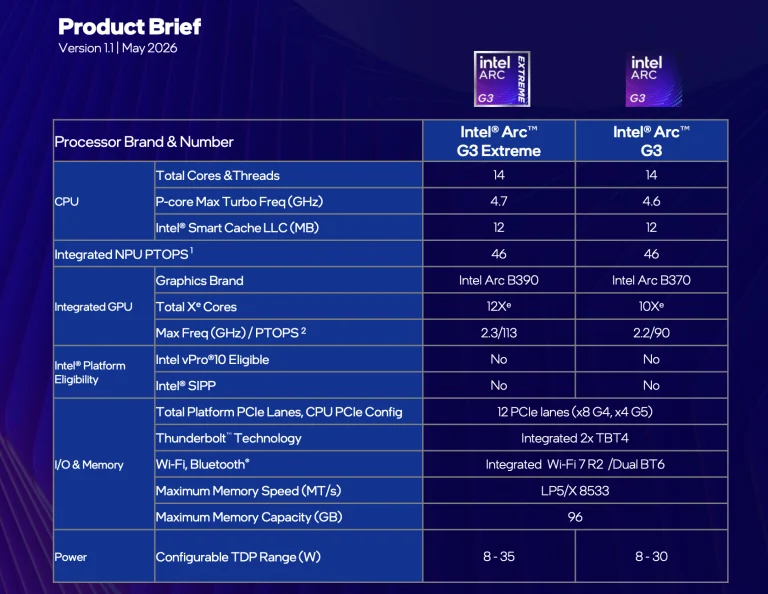
The CPU configuration, two performance cores, eight efficiency cores, and four low-power efficiency cores, is a deliberate departure from the beefy multi-P-core designs found in gaming laptops. In a handheld context, that makes sense: games running at 720p or 800p handheld aren’t typically CPU-bound in the same ways a desktop title at 1440p might be. What you do care about is sustained clock speeds without hammering a small battery, and LP E-Cores are essentially built for exactly that kind of background load management.
On the graphics side, the Xe3 architecture brings up to Arc B390-class GPU hardware, the same Battlemage-generation silicon Intel has been shipping in discrete desktop cards. More relevant for this market is XeSS 3, which Intel is positioning as a three-part stack: XeSS Super Resolution for AI upscaling, Multi-Frame Generation for interpolated frames, and Xe Low Latency for engine-level input response. If the driver support is solid. a real if, given Intel’s historical arc software journey, that’s a competitive feature set against AMD’s FSR 3 ecosystem and Qualcomm’s equivalent on Snapdragon X Elite handhelds.
One feature worth calling out specifically: Intel Precompiled Shaders. The idea is that instead of your handheld compiling shaders on-device the first time you boot a game, which causes the stutters that have become a running complaint in the Steam Deck era, the device downloads pre-built shader caches from Intel’s servers. The obvious caveat is game compatibility coverage, which Intel hasn’t fully detailed yet. But if the library is broad and the delivery is reliable, this could be a meaningful differentiator over AMD’s current approach.
The connectivity story is also stronger than you’d expect at this form factor. Thunderbolt 4 with Thunderbolt Share support gives you 40 Gbps, relevant if you’re docking a handheld to an eGPU or trying to quickly dump a large game library across devices. Wi-Fi 7 R2 and dual Bluetooth 6 round out an IO spec sheet that honestly outpaces most gaming laptops shipping at twice the price point.
Manufacturing on Intel 18A is the other headline. This is Intel’s most advanced logic process to date and, importantly, it’s fabricated domestically in the United States. In the current geopolitical climate around semiconductor supply chains, that’s a practical selling point for OEM partners and potentially for enterprise handheld buyers, not just a marketing bullet.
Speaking of OEMs: Acer’s Predator Atlas 8, MSI’s Claw 8 EX AI+, and OneXPlayer are the confirmed launch partners, with systems expected to start shipping in June 2026. Intel says broader OEM availability rolls through the rest of the year. More details are expected out of Computex 2026 next week, where we’ll be pushing for hands-on time and actual performance numbers.
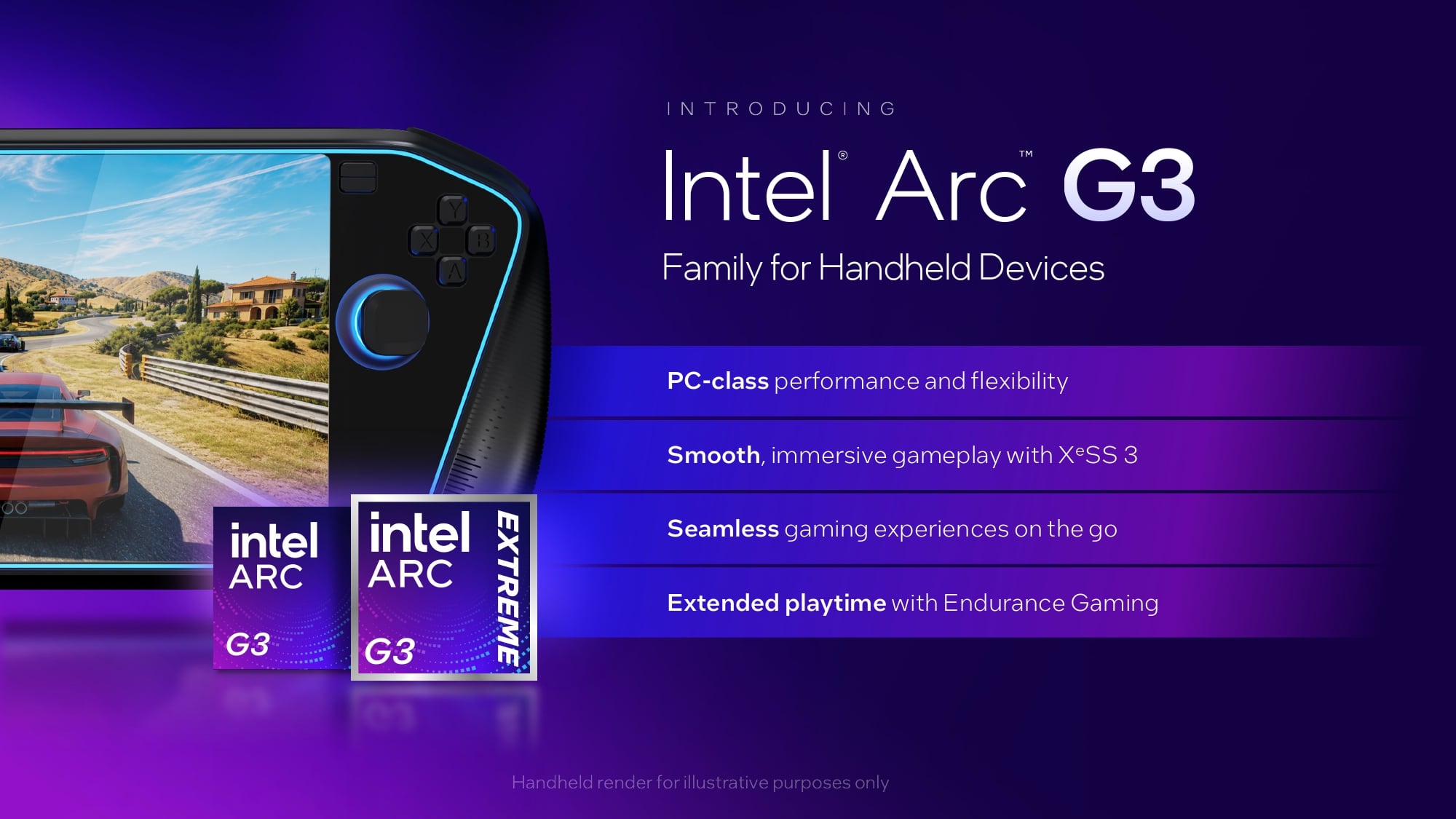
The positioning is clear, Intel wants to own the Windows handheld market before it gets further fragmented by Qualcomm’s ARM push and whatever AMD has coming next in the Van Gogh successor lineage. Whether the G-Series actually executes on that ambition will come down to driver stability, OEM thermal design, and real-world battery life numbers. All things we’ll have opinions on once we get hardware in hand.