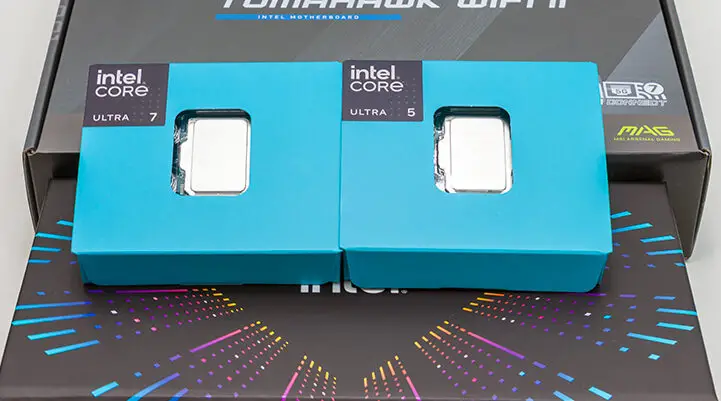

Before we being we must make things clear. “Plus” models are not some rebranding of ‘KS’ and its underlying thought process. KS branded CPUs are (possibly were) the end result of extreme binning. One where only the top 5 to 10 percent of a given K model were able to support the increased frequencies and pass the added factory testing they were put through. Put another way, KS models are/were options for “money is no object” consumers who were unable/unwilling to wait for the next generation, and rather wanted/needed/desired/demanded more performance RIGHT NOW… and were willing to pay for the privilege of getting their way.
Plus models also are not true successors to the previous line they are based upon. Yes, some low level tweaking has occurred and will occur in future Plus branded CPU models. But, and Intel wants us to be very clear about this, the amount of tweaking no longer meets the new standards required for justifying an entirely new generational name. Thus “Core Ultra 200 Plus” and not “Core Ultra 300”.
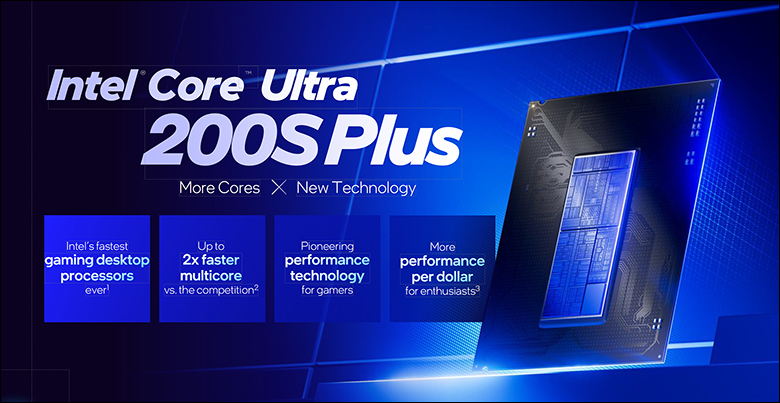
So instead of these various internet rumors and memes, the reality is the Plus is all the above but also none of the above. Thus, instead of trying to fit it into previous Intel concepts and/or nomenclature the most important thing to understand is that Plus signifies the official rebirth of Intel’s Tick/Tock product development cycle. Kinda. Sorta. Ish… If you keep to the original idea behind Tick/Tock and not the (mis)management driven mess it morphed in to.
Yes. In theory post nu-Intel at least tried to keep to a “release new tech/arch and called it a Tick and then refine it and call the improved version a Tock” cycle. In theory. In reality, there has not been a ‘true’ Tick/Tock cycle for many moons now. One could argue the 12/13th generations was a Tick/Tock but that is pushing things a wee bit further than we are comfortable with… as the cores in the 13th were based on a different architecture compared to the 12th gen counterparts. However we can see the other side of that argument too… as they were different but not that different. Making the state of Intel’s classic Tick/Tock philosophy a confusing contradictory mess that one could successfully argue for/against in any generation.
Those days of confusion are now in the past.
Instead we will be seeing an official Tick(new arch/tech) followed by a Plus (refinement of said arch and tech and thus a classic ‘Tock’)… followed by a Tick (new arch and tech) followed by Plus. Meaning it is Tick/Plus/Tick/Plus. Which is what the spirit and intent behind the original Tick/Tock product development cycle was.

That is why with this new Core Ultra 200 Plus series, the amount of refinement and evolution over the previous Core Ultra 200 series is very limited in scope. For instance. in this first ever Plus release arguably the biggest tech refinement is in the SoC Tile. Not the P and E core Compute tile. To be precise, the new and improved SoC tile features a new and improved Dual Channel Integrated Memory Controller (IMC). One capable of DDR5-7200 when using two CUDIMMS without “overclocking”… but should be able to handle DDR5-8000 even with UDIMMS (aka what us mere mortals use that we call ‘RAM Sticks”). Possibly even DDR5-8400. Though the later is pretty much luck of the draw.

Furthermore, and extremely interesting, is the fact that this IMC is now capable of handling Quad Rank CUDIMM (or what the industry is trying to call ‘CQDIMM”). This new tech may do what CUDIMM has been unable to do: give a good reason for why buyers should look past UDIMMS. As the name suggests each CQDIMM has not one, not two, but four separate Ranks of RAM onboard and an intelligent on-DIMM CKD discrete controller that is not only aware of 4 ranks but can handle all four. Kinda sorta. We are still dealing with a dual channel controller capable of only 2×32-bit sub-channels (four total). But in practical terms what this doubling of ranks means is a halving of potential latency during heavy RAM I/O tasks… as the onboard CKD chip pushes data from two ranks, and then when those are on ‘cool down’ (aka finishing their write cycle) it can immediately push more data to the other two. At which point the first 2 ranks are ready and it can repeat this cycle for as long as the onboard capacity holds out.
This improvement will of course not be a magic bullet and for many scenarios (especially in the consumer / home user environment) the real world impact is minimal… but will help in a lot more usage cases then you may be assuming. In earlier years the largest bottle neck would be if the CPU requested data that is located on the first group of 2’s chips and it would have had to wait for cool down completion before starting the next I/O request cycle. Which would nuke any and all benefit of costly investment in CQDIMMS. With the latest algorithms and decision tree ‘AI’ baked into the Intel’s Core Ultra 200 Plus IMC, Intel is able to regain a good chunk of that potential via the use of out of order scheduling. One where very fast reordering of the requests can minimize this surprisingly common scenario and make CQDIMM make sense for power-users… especially since it allows for 128GB per DIMM configurations!
Yes, big boi RAM that offers both capacity and sane latency penalties is back on the menu boys, and “monthly new truck payment” sized MSRP per CQDIMM or not, that is a one-two combo many a prosumer (and certainly professional) will be drooling over. Possibly even asking themselves if they really ‘need’ two kidneys/arms/legs or not. Only time will tell if CQDIMM takes off, but at least there is an now a good justification for taking the plunge and moving beyond ‘stick RAM’… or at least is if you go Team Blue. Team Red is now on the backfoot with a noticeably less agile product development cycle. One where CQDIMM may, or may not, even be baked into their next Ryzen CPU IMC. Giving Intel an immediate advantage with enthusiasts. That alone is almost worthy of a new CPU generation… and certainly of a new ‘half’ generational release.

The next change is the unleashing of entirely new software… aka Intel Binary Optimization Tool or ‘I-BOT’ for short. Since the Internet does what the Internet is known to do, we are going to get used to calling it “I-roBOT”. Jokes aside, I-Bot is a first-of-its-kind binary translation layer optimization program. One that basically does a modern take on the old ‘man in the middle’ attack… just for good and not evil purposes. Hyperbole aside, the idea behind I-roBOT is simple: not everyone compiles for Intel in general and fewer still tweak their compiler for modern Intel systems. Instead most just compile generic x86 so that it will ‘just work’ on any x86 system. Packing in a lot crud and removing a lot of performance in the process. Thus I-BOT tweaks the requests so that they are not just INTEL x86 but modern Intel x86 requests. In turn meaning fewer missed requests/calls/cache guessing that keeps real-world IPC from ever reaching its theoretical IPC level.

How does it do such black magic? In a nutshell, when enabled this program resides silently in your memory looking for certain software programs to startup (right now basically certain games only). Then it intercepts and streamlines the generic x86-based calls and rearranges them in real-time so that they are Intel optimized code. All without skipping any intended work, decompiling the binary, accessing source code, modifying the source code files, or anything else that results in permeant changes. Making it a truly transparent Level 3 daemon tool that does nothing other than make your life better… when and only when you ask it to do so.
Better still this is not vaporware to be announced later. It is already proven to grant Plus owners “up to” a ~20% performance boost. Albeit with some caveats. The largest of which is this wunderkind gets its best results from the worst offenders. For example, product developers who we believe are actual trolls that feed off the suffering of buyers of ‘bad ports’. Games those “AAA” software ‘developers’ release are ripe for Intel BOT to provide you with some major gains. 10 to 20 percent FPS improvement gains. Conversely, good developers who take the time to try and optimized their code? 2 to 10percent improvements… and even then some of I-roBOT’s tricks will most likely trickled down to HWGPO in the near-future but have not yet simply because I-BOT is using hooks and calls that did not exist before Core 200 Plus CPUs was released.
The next caveat is simple. It only works on games (and eventually apps) that are bottlenecked because of the CPU. So if the GPU is the bottleneck… it is probably still going to be the bottleneck no matter what Intel does. Which will explain, in retrospect, why Intel never released a performance package update with support for {fill in your favorite title} included.

Somewhat good and yet bad is while it is limited to non-Online games right now Intel is in talks to get it to work with online games. They just have to make sure that a game’s anti-cheat software does not flag it as cheating and then nuke your account. Which will be interesting to see how many actually okay I-roBOT’s use on their code. After all, it is modifying code in real time. Which is one of the largest things anti-cheat software looks for. Furthermore, if I-roBOT does gets whitelisted… what is to stop cheat developers from spoofing I-roBOT to help their software avoid detection? Mix in the fact that it will make a developer look as bad at their job as they really are… and… we are “cautiously optimistic” about future online apps being added but are rather pessimistic about the number of devs willing to take a(nother) hit to their (already tattered) reputation.
Moving on. While Intel is hoping to offer non-Winslop editions that work on Team Penguin that days is still firmly in the hopes and dreams category. With no promise. No timeline, and just a “we hope to do it later” port to Linux. On the positive side, some of the dev team are Penguin users and you just know they are advocating strongly for RHEL/Fedora/Debian/ubuntu/Arch/Mint/.etc port as soon as possible. So while there is no date, we think sometime in the near to mid future it will stop being a classic example of “WinTel L’Exclusif” and go from being OS antagonistic to more… OS agnostic. As it should be. Bad code exists on all platforms. Just not Windows.
Lastly, is it only works on specific games (and eventually apps) that Intel has chosen to spend the time on tweaking. This is because I-roBOT is the epitome of bespoke coding with zero chance of a ‘universal’ tweak profile ever being released. Instead, each and every supported software program will get specific tweaks to get the most out of that specific example of spaghetti code. That is a time, and money intensive program. One that should not be needed, and yet is desperately needed… and will as long as the state of ‘AAA’ games remains the same. Which it will as long as megacorps are rewarded for their bad behaviour.

The last caveat is simple to state but rather nuanced to fully explain. Yes, I-roBOT promises to change the sorry state of affairs all PC Gaming enthusiasts find themselves mired in. Yes, the idea of with just a few clicks anyone can overcome this era of shortsighted greed and actually get on with enjoying the latest and greatest games is fantastic. So fantastic that we would pay good money for it. Sadly, while it is free it is limited in that you only get access to this black magic if you run Team Blue’s Plus (or later) generation(s). Team Red owners are… well… SOL… and even older Team Blue customers may also be left out in the cold (only time will tell if Intel can keep their non-promise, promise of backporting… or not).
On the surface that caveat to this groundbreaking achievement should be a deal breaker… as it sounds like something nu-Intel management would dream up and not what original ass-kicker Intel would do. The reality is more nuanced. Deciphering in real-time spaghetti code, AI “Vibe” code, and/or Made In India/China coding sweatshop’s “output” is bloody difficult. Actually understanding the intention behind the code enough to optimize it… in real-time and without negatively impacting Frames Per Second?! Now that is moonshot levels of difficulty. Yet Intel did it. It took them years to do it… but instead of holding their breath, and hoping for change from companies who only worry about the next quarterly profits, Intel took the lead and did something about this shi… errr … circus now. Even if the answer is not perfect and will not make everyone happy… it still is the very definition of Improvise, Adapt, and Overcome. Furthermore, this is day one. As time goes by the blatant downsides (like little to no backwards compatibility) will disappear… but the need for this software will not.