With many of the juggernauts of the AIO industry failing to keep up with the ever changing demands of buyers it is becoming increasingly difficult to find AIO models that is able to offer both excellent performance and a reasonable MSRP. Which is a shame. Mature markets are usually synonymous with consistency, reliability and quality… and yet here with the market filled with cheap Chinseium AIOs; new models from “serious” manufactures which offer nothing over the previous generation; and whole lot of AIOs with slick marketing but not much additional performance to backup all that artificial hype.
Thankfully, there are still companies that have stepped up to satisfy the needs of buyers…and not just their shareholders. Companies such as Arctic, Lian Li, and recently MSI. While a relative newcomer to AIOs MSI’s “MPG CoreLiquid P13” series did make a (pardon the pun) splash and helped put MSI on many an experienced builder’s radar. In a good way. As MSI are constantly refining their models it should come as little surprise that they are already have an upgraded and refined version of the P13 ready to go: the MPG CoreLiquid P22.

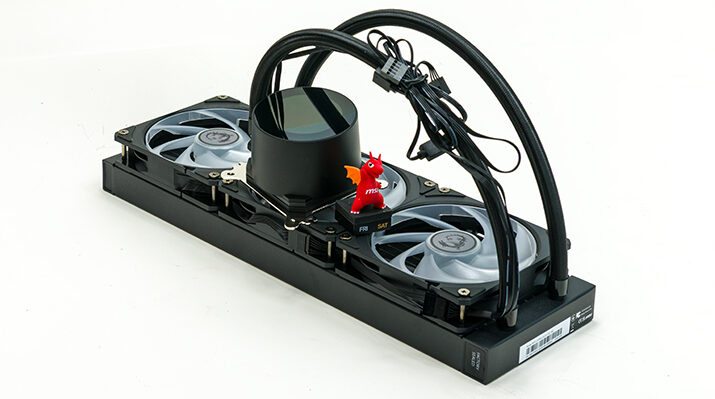
As with the P13, the new P22 will be offered in class sizes that range from “240” (2x120mm) to “360” (3x120mm) and in both an all-white and an all-black variant. As is our usual MO we will be doing a deep dive on the flagship P22 360. To be precise the P22 Black Edition which has a rather reasonable asking price of only $129.99 USD (or aboot $180 CAD).
Even with just a quick glance at the specifications there are indeed a few noteworthy features that standout. Features that do indeed hint, and sometimes outright promise, to boost performance well above what the already rather capable P13 could offer. The most obvious being the water channels in the new and improved “thin” (aboot 27.2mm thick) radiator. As with the P13 before it, this new rad uses a standard 6 up and 6 down water channel configuration; however, each of these rectangular(ish) “tubes” are now 25% wider. Meaning they can handle more water and do so with lower back pressure than the P13. Which in turn means increased velocity and increased heat carrying capacity.
Which leads nicely into the other noticeable change to the MPG CoreLiquid Pxx blueprint: a noticeable increase in the aluminum cooling fins’ folds per inch (FPI). Like most companies in the AIO corner of the marketplace the older P13 took a moderate “balanced” approach to FPI and opted for reduced noise at the expense of reduce surface area. Specifically MSI opted for pretty much the AIO “industry standard” of approximately 18FPI… with “industry standard” being synonymous with “mediocrity”. The new P22 is not like most AIOs and rather is edging into custom water cooling territory with a denser 20FPI. On paper this is a ~10 percent boost in surface area which, in simplistic terms, should (in theory) translate to increased efficiency in turning hot water into hot air.
Of course There Ain’t No Such Thing As A Free Lunch and this increased fin density means increased statistic pressure requirements from the fans… as there is literally less gaps between the fins for the air to be pushed through. So we will be paying close attention the “CycloBlade 7” 120mm fans MSI has selected for this unit… which also have been refined since the P13 days. Specifically they are now a tiny bit slower (2K vs 2050RPM) but offer numerous tweaks in their static pressure curves, their noise profile, and overall aesthetics. How much has changed from the previous P13 generation remains to be seen but on paper they should be up to the increased task while also offering a few interesting tweaks like custom cabling (or what MSI calls “EZ Connect”) to help boost them above the typical ‘free’ factory fan series.
Also firmly in the nice to see category is MSI have leaned into hot spot optimization in a big way. To whit the P22 has been highly optimized for the AMD 9000 series. To be precise, MSI have modified the layout of their waterblock’s installed footprint so as to be optimized for the new 9000’s hotspot location. Which in turn maximizes cooling performance as well as allowing buyers the luxury of running the fans and pump at slower speeds without needlessly compromising performance.
Mix in noticeable improvements in debloating the software that runs the custom 2.1-inch (540×540 resolution) LCD; with further refined topper fascia covering for the mounting hardware and we do have high hopes for this thin-style radiator based cooling solution. Especially when the rather low 130USD/180CAD asking price is taken into account. An asking price which not only places it towards the lower end of the mainstream market but is a good sixty USD less than what the P13 360’s launch day MSRP was. Now that should grab many a potential buyers attention. So let us see if the P22 is indeed an improvement… or if the lowered asking price is a massive red flag.