

Let us be clear and precise. Manual “old school” overclocking is pretty much dead. As we have stated for the past couple generations, the days of days spending countless hours to fully unlock the ‘free’ potential of your new CPU no longer makes sense. Sure, if it overclocking is your hobby it is “time well wasted”, but for most the fact of the matter is Intel and AMD have already done the hard work and know what the frequency ‘sweet spots’ of a given core architecture is… and then gives it to you. For a price. As the days of giving away “free performance” are long gone.
There is however a larger caveat that goes along with that analysis. Namely heat and assumptions about heat. Both Intel and AMD assume you are going to have proper (or at least adequate) levels of cooling performance when they design and then spec out a given model’s frequency range (be it base, boost, max, thermal velocity… or any other ‘gear’ they decide to include).
In other words they don’t expect is you to cheap out on cooling and if you do… that is a “you problem” not a their problem. So if you use a baked potato no modern CPU is never going to unlock its full potential. Use good cooling… and it will. Simple as that.
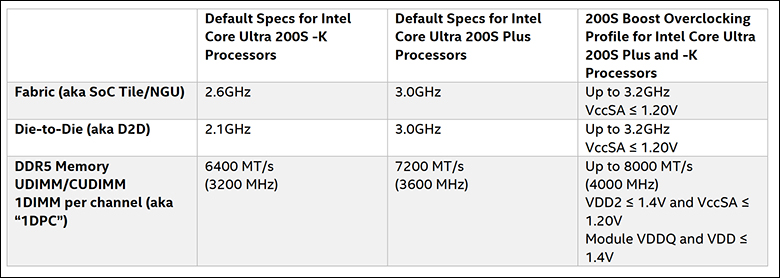
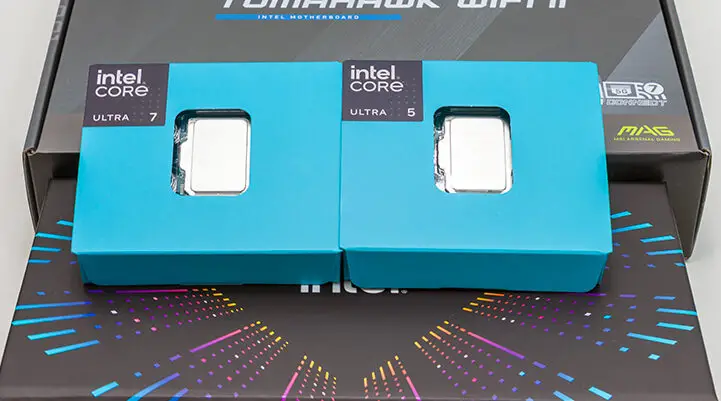
Things get a bit interesting for Intel CPUs when you not only have good have copious cooling potential… as the official 200S Boost Overclocking Profile starts to make sense. This BIOS “overclocking” profile is not Plus specific and instead works on some older (non-Plus) Core Ultra 200S CPUs. For example, the Core Ultra 285K, 265K,265KF,245K and 245KF all can run a variant of it. With that said… they were designed around Core Ultra200S Plus processors. So while you can, the older CPUs run rather hot with it enabled. So hot they really, really need all the cooling you can give them. Which should come as no surprise as they are applying a rather hefty overclock to the Fabric bus (NGU), D2D bus (aka inter-die fabric bus that connects the various tiles to one another), and even overclocks the IMC.
To be a bit more precise, in return for +900Mhz on the D2D, up to (1DPC) 8000MT/s supported on the IMC and NGU fabric running at 32X instead of 26X ratio… the system sets VccSA at or above 1.2v, the VDD/VDDQ to 1.4V or higher and the adaptive V/F curve is pushed to the upper limits. In simplistic terms, think up to 30% more power consumption and thus nearly a third more heat production that your CPU cooling solution has to be able to handle. Needless to say, this an aggressive Over Clocking profile that ignores core speeds and instead focuses in on the bottlenecks inherent to the existing Intel Tile design. One that in the process of turning the heat up tries its best to sell you on the idea of not wanting/needing/desiring the missing Core Ultra 200 ‘KS’ model(s).

Don’t get the wrong idea, when you use this BIOS level Intel certified overclocking profile on your new Core Ultra 200S Plus CPU it too will run noticeably hotter. They have to… as they are pushing a lot of the internals rather hard. Not as relatively hard as the non-Plus variants, as the Plus variants already come with a lot of it ‘baked in’, but still hard for the original architecture. This baking in of most of the BoostS profile, and natively optimizing said changes, is most likely where a lot of the tweaking and optimization of the architecture was focused around. We say that as while it does raise temps (and power consumption) it is nowhere close to being “you better have a 360AIO or bigger/better if you want to run this profile” heat output like you will see with say a 285K.

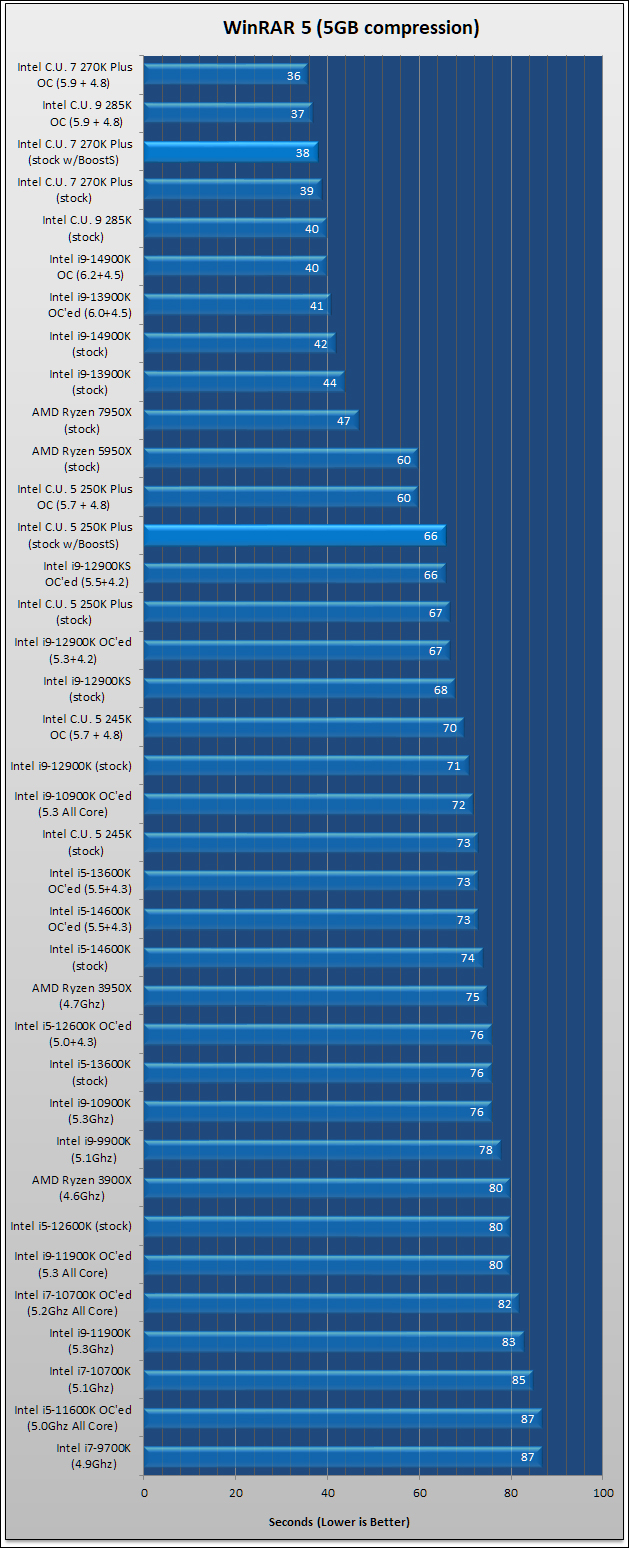
Whether this added heat in return for a bit more performance makes sense to you and your needs is not something we can tell you or even comment on. Only you know what you want/need/desire. What we can say, and recommend, is you should at least try it before you write it off. After all this is an official Intel overclocking profile and Intel specifically state it will not void your warranty. Mix in the fact it is basically one click in your BIOS to enable or disable, and there really is no downsides to at least trying it. Especially since it can work in conjunction with I-BOT and thus can help boost performance even higher in memory and / or fabric bound applications, making for a very interesting 1+2 combo.